
The Magic of the Junction Pipe
One Object, Infinite Stories
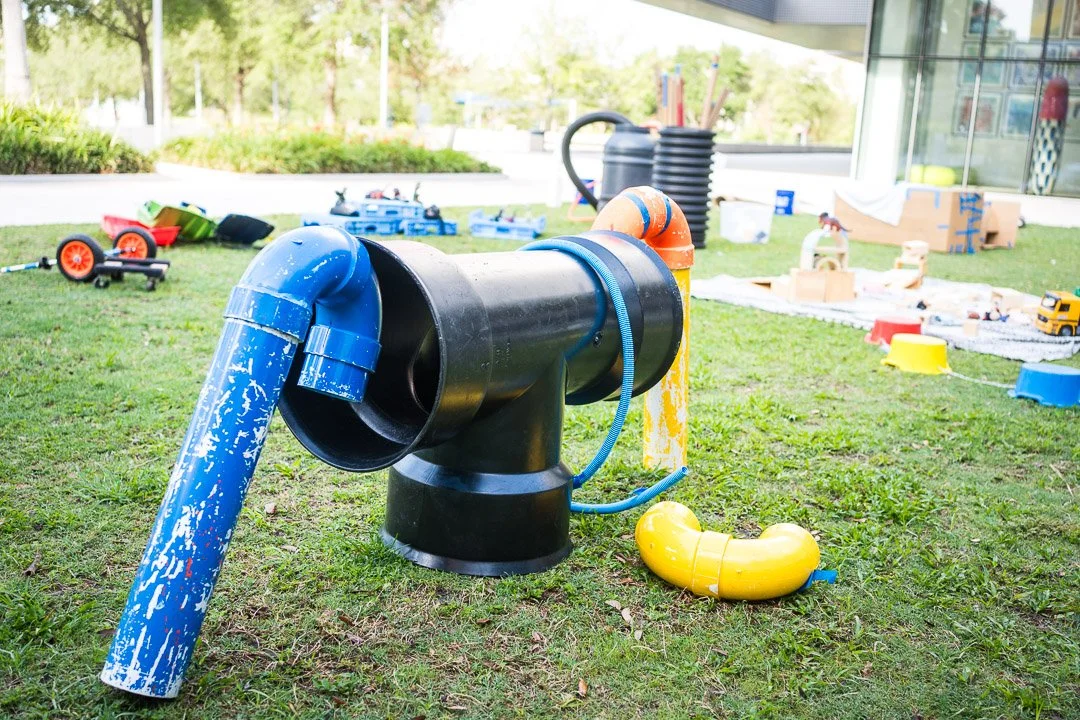
Most days, children move through a script written for them: rules, routines, and expectations, with little room to write their own story. But with loose parts, we hand the power back and let the child’s own questions lead the way. This plumbing junction pipe is self-leveling. It automatically adapts to a child’s specific ability, meeting every child where they are. With no instructions and no way to 'fail,' it allows them to stop performing for adults and start trusting their own instincts.
The Entry Point: No Way to Fail
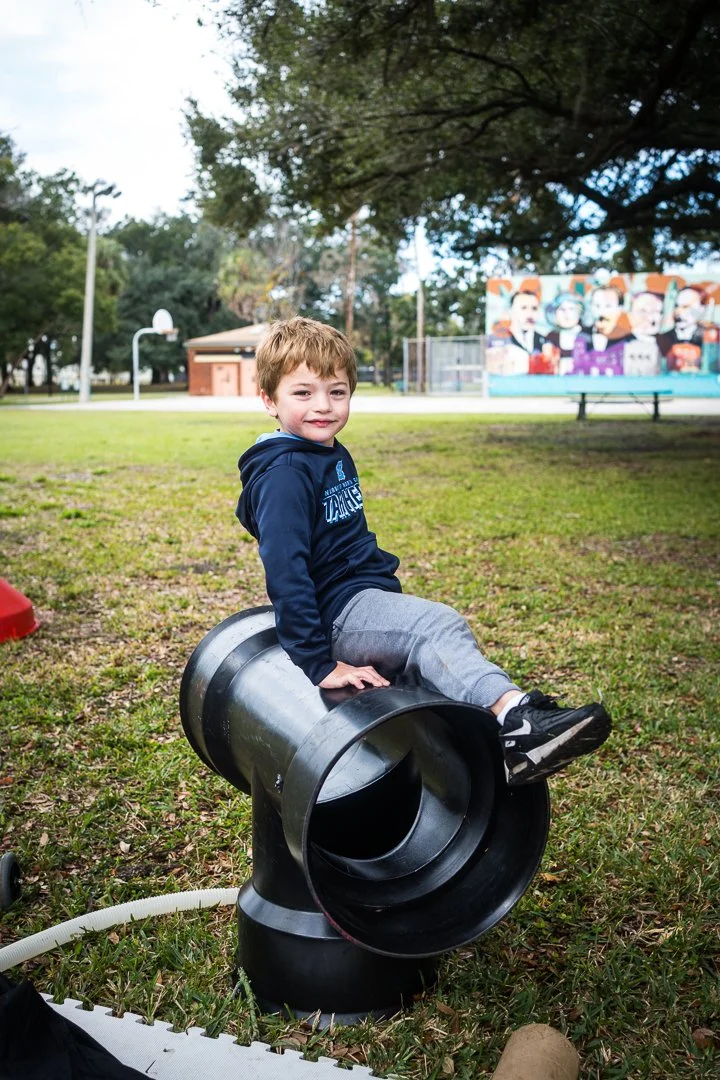
In a play space with no 'correct' outcome, the materials meet the child exactly where they are, shifting the focus from 'doing it right' to 'doing it my way'.
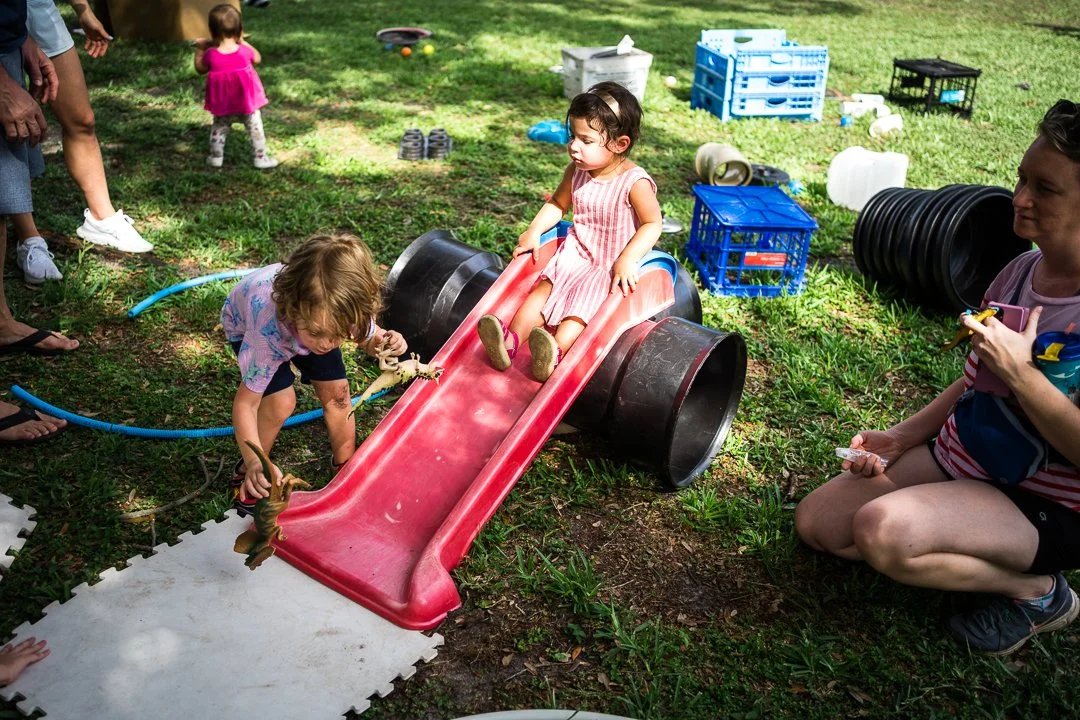
The "Zero Barrier" Entry: There is no instruction manual to read. A child might start by simply sitting on top to gain a new perspective or using it to prop up a slide for their dinosaurs.
No Wrong Answers: Because the object has no fixed purpose, the child cannot "get it wrong." This immediate success builds the baseline confidence needed to try harder things later.
The "Safe to Try" Zone: When we remove the fear of failing, we open the door for agency. A child who isn't worried about being wrong is a child who is brave enough to innovate.
Tuning In: Inner Knowing and Sensory Choice
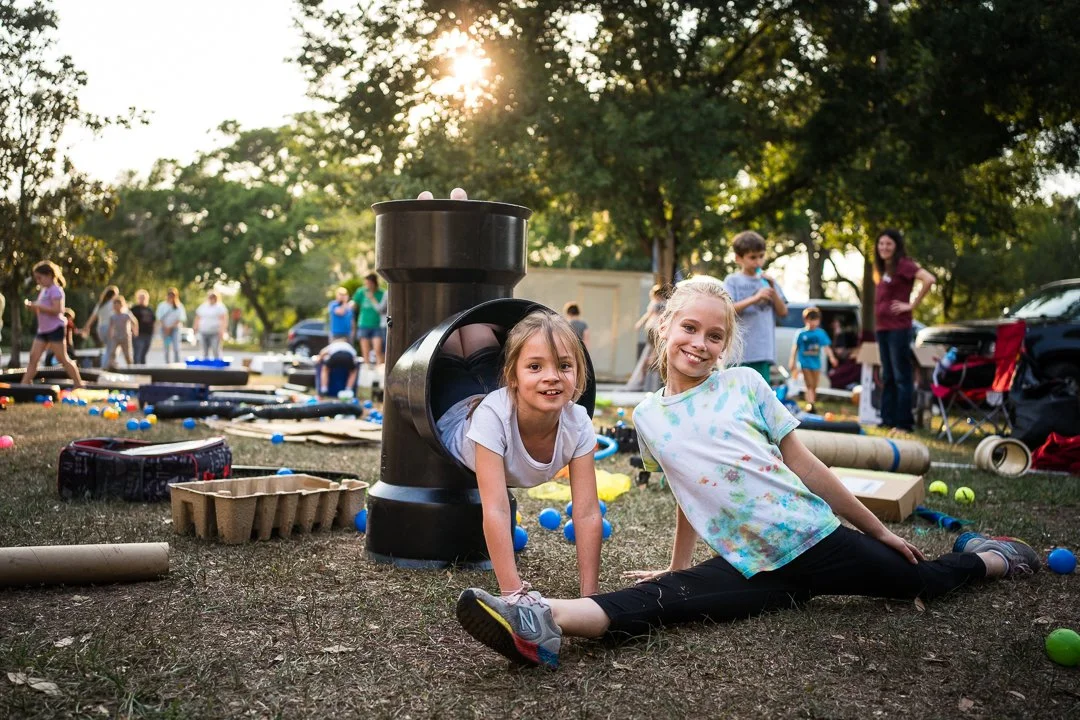
As children grow, they use the pipe to meet their own internal sensory needs.
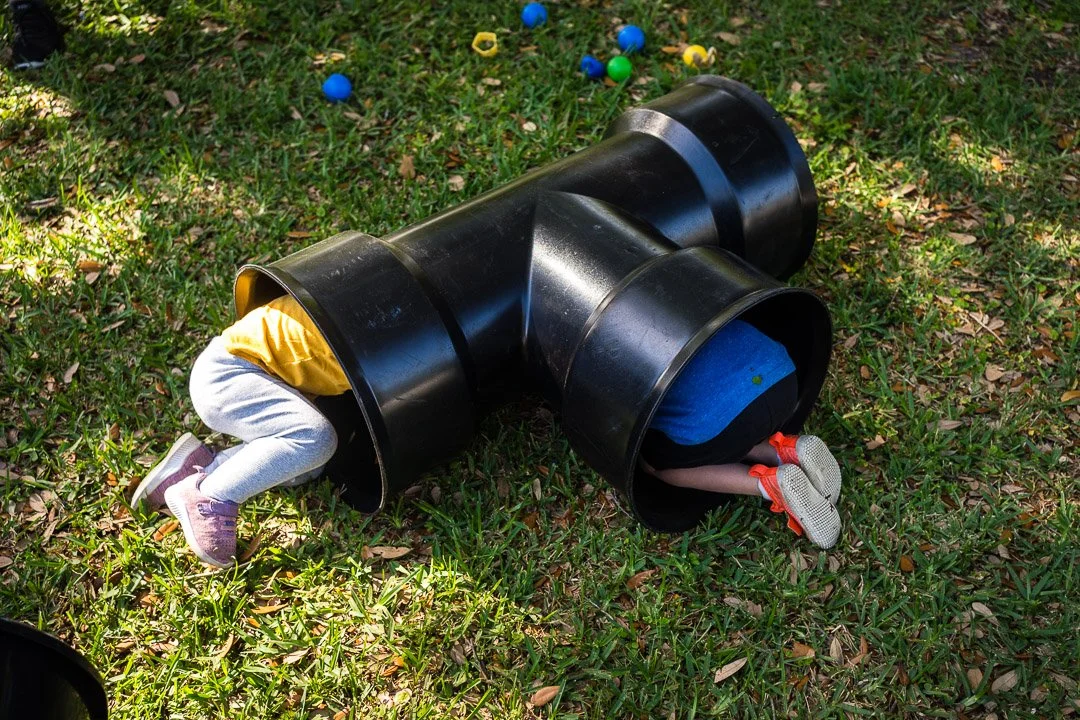
Interoceptive Awareness: A child might feel overstimulated by the park's noise and choose to crawl into the cool, dark, quiet interior of the pipe to reset.
Proprioceptive Exploration: They learn how their body fits into tight spaces, trusting their instincts to navigate the curves.
Choosing the Pace: We don't tell them to crawl; they listen to their own "inner knowing" to decide when they are ready to explore the "inside" of the play space.
Taking the Lead: Agency and Making Choices
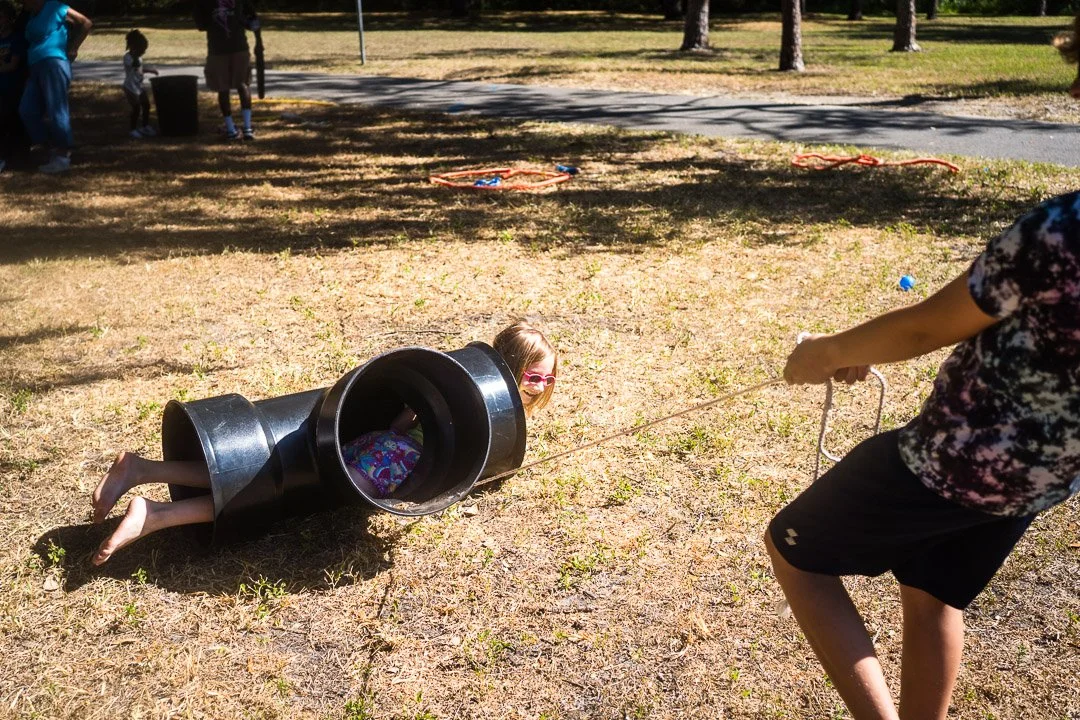
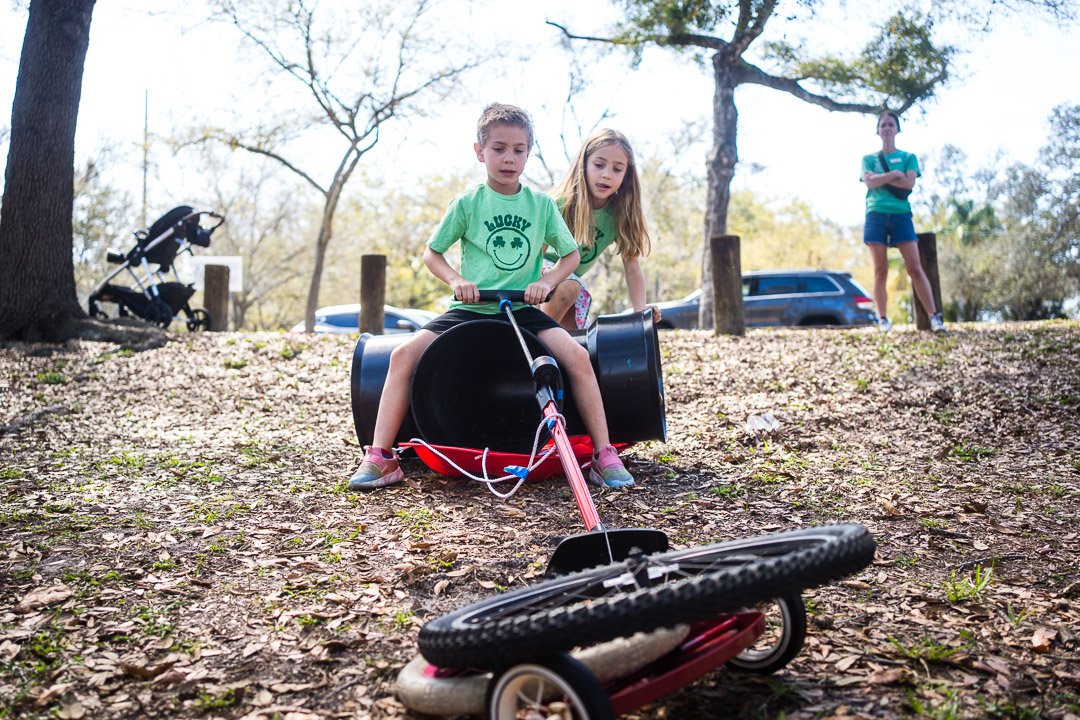
When kids realize the pipe can be moved and manipulated, their agency takes center stage.
Active Decision Making: "Should we pull a friend through the grass?" or "Can we turn this into a chariot with a rope and a wheel?"
Risk Assessment: Every choice involves a tiny bit of "knowing,” testing the weight of the pipe or the friction of the grass. They aren't following a coach's script; they are writing their own.
The Master Class: Divergent Thinking
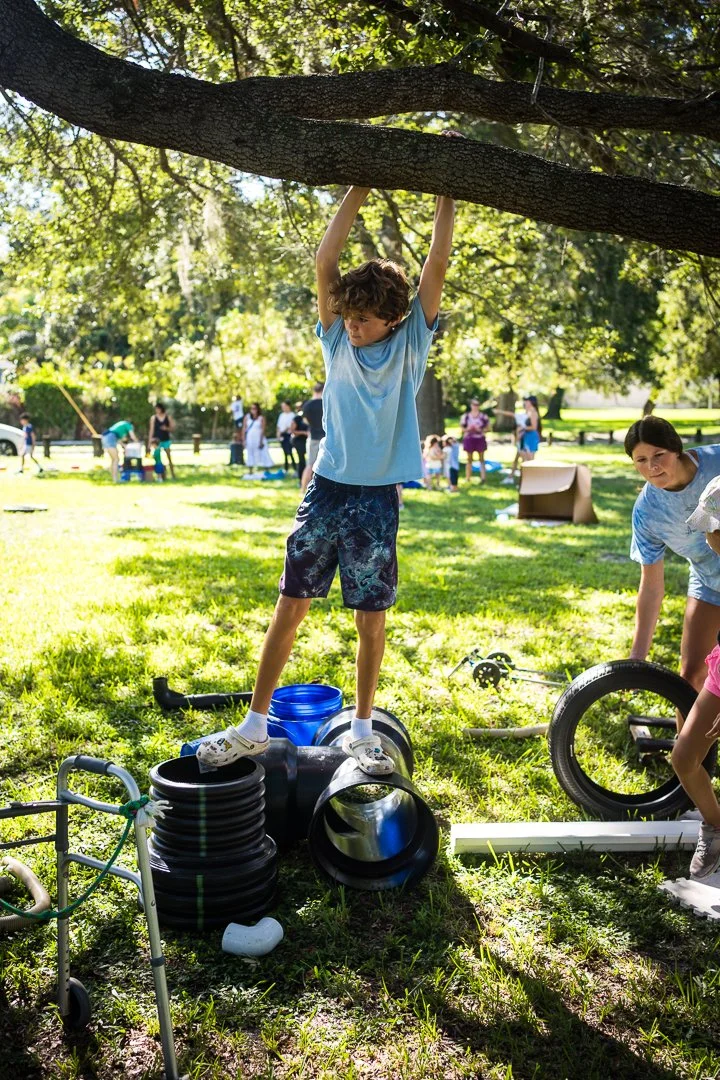
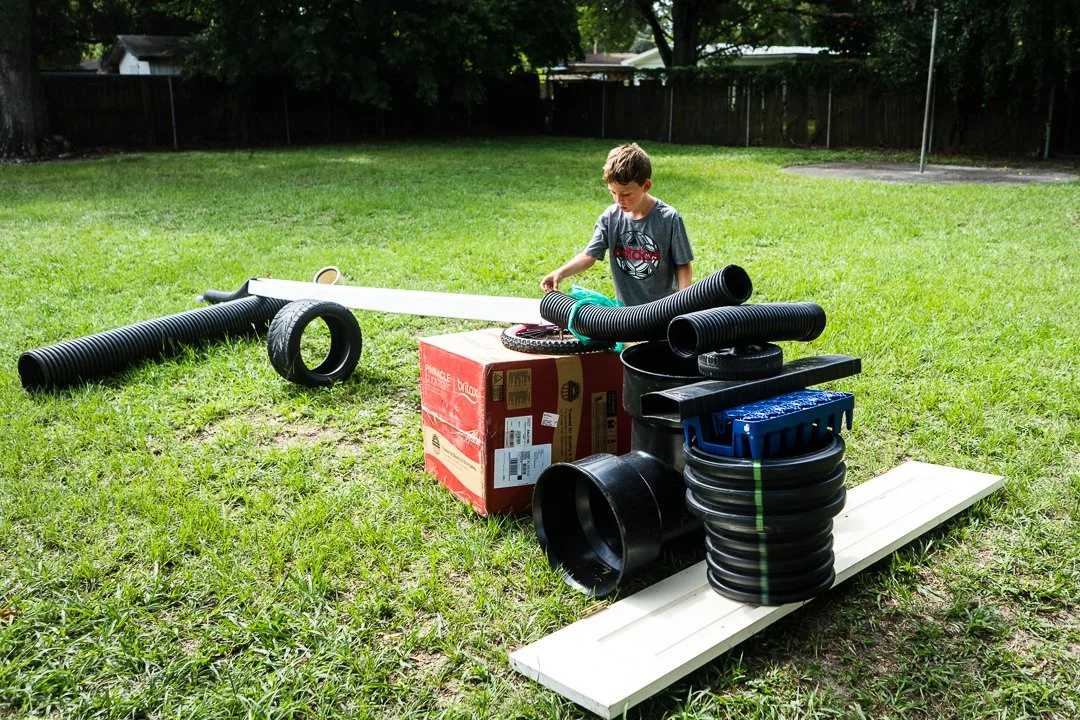
Eventually, the pipe becomes a structural foundation for complex systems engineering.
Divergent Thinking: This is the ability to see multiple uses for one object. Here, the pipe is no longer a "tunnel," it is a structural hub for a massive ball run or a landing pad for a "lava" jump.
Critical STEM Concepts: They are practicing physics (load-bearing, stability) and geometry (angles of connection) through trial and error.
The Rooted in Play Impact
When we stop giving kids the "answers" (toys that only play one way), we give them back their questions. Whether it's a 12-month-old feeling the smooth plastic or a 12-year-old using it to support a bridge, this one loose part helps every child learn: "My instincts are good. My brain can find a way."